
Net return since inception7
Metrics Direct Income Fund

Fund Overview
The Metrics Direct Income Fund seeks to provide investment exposure to Australian corporate loans, diversified by borrower, industry and credit quality – an investment space dominated by the banks.
Through active portfolio management, Metrics seeks to balance investor requirements for return and capital preservation.
Target Return
The Fund targets a return of the RBA Cash Rate plus 3.25% p.a.1 (currently 7.60% p.a. net of fees) throughout the economic cycle.
1 This is a target return and may not be achieved.
How The Fund Provides Regular Income2
Investors Commit Capital
Investors provide funds to Metrics, which are then made available for lending to Australian and New Zealand companies across diverse industries and sectors.
Companies Access Finance
Metrics lends this capital to businesses, supporting their growth and providing an important source of non-bank debt finance.
Income is Distributed to Investors
Under their loan agreements, Australian companies borrowing from Metrics must pay interest at agreed intervals. These repayments support the Funds’ ability to deliver monthly cash income2 to investors.
2 Income payments depend on the success of underlying investments and are at the Responsible Entity’s discretion.

Fund Features
Diversified Portfolio of 300+ Corporate Loans3
The Fund portfolio provides exposure to over 300 loans, diversified across borrowers, industries and the credit spectrum.
Monthly Cash Income4
Australian companies who borrow from Metrics are required under their contractual obligation to pay interest at regular intervals. This enables Metrics to offer monthly cash income.
Mitigating The Impact of Inflation5
Corporate loans can provide protection against inflation because they earn interest that is typically charged at a floating rate. So, if interest rates rise, your returns should too.
Low Capital Volatility
Corporate loans exhibit a low correlation with public market securities. Over the past decade, corporate loan loss rates have remained below 1%, even during economic downturns, with a peak of 0.68% post the Global Financial Crisis (GFC).6
3 The fund may not always be successful in constructing a diversified loan portfolio.
4 Income payments depend on success of underlying investments and are at the responsible entity’s discretion.
5 Past performance is not indicative of future performance.
6 Source: Major Bank APS 330 reporting. Past performance is not a reliable indicator of future performance.
Investment Risks
All investments are subject to risk, which means the value of your investment may rise or fall. Before making an investment decision, it is important to understand the risks that can affect the value of your investment. A summary of some of the main risks are outlined below. Please refer to section 8 of the PDS for a more comprehensive list of potential risks before making an investment decision.
Liquidity Risk
The investments of the Wholesale Funds and accordingly the Trust and Sub-Trust are generally less liquid investments than other investments (such as exchange traded investments) as the investments that the Trust is exposed to via the Sub-Trust and Wholesale Funds are long dated (up to 10-year terms).
The ability of the Trust, the Sub-Trust and Wholesale Funds to dispose of an investment may depend on market liquidity, the terms agreed with the relevant borrower and the maturity date of the loans. The liquidity of the investments to which the Trust (via the Sub-Trust and Wholesale Funds) is exposed will also be dependent on a borrower’s ability to repay a loan.
Credit and Default Risk
Credit risk is the risk that one or more assets to which the Trust is exposed may decline in price or fail to pay interest or principal when due because the credit counterparty or borrower experiences a decline in its financial status.
Default risk is the risk that a borrower defaults on their obligations, for instance by failing to make a payment due or to return the principal.
Investment Strategy Risk
The Trust will invest in the Sub-Trust and the Sub-Trust will invest in and alongside the Wholesale Funds. As such, the Trust may be exposed to the risks that are specific to the Sub-Trust and the Wholesale Funds. This may include operational risks, distribution risks, valuation risks, liquidity risks and tax risks that are specific to the Sub-Trust and the Wholesale Fund
Leverage RIsk
To the extent that the Trust, Sub-Trust or the Wholesale Funds use leverage to fund investments, and the counterparty to an investment was to fail to pay interest or principal when due (a payment default), the Trust, Sub-Trust or the Wholesale Funds are still obliged to service their interest and principal payment obligations.
The inability to do so may give rise to the Trust’s, Sub-Trust’s or underlying Wholesale Fund’s loan provider taking action under the relevant facility terms to recover amounts owed.
Utilisation Risk
The Trust will be exposed to (through the Sub-Trust and the Wholesale Funds) both drawn and undrawn loans that may be drawn up and down by the borrower over time.
Conflicts of Interest/Related Party Transactions
The Sub-Trustee and its related entities are trustees of each of the funds that the Trust is exposed to. Metrics is also the manager of each of those funds. Situations may arise where Metrics, the Sub-Trustee and the Sub-Trustee’s related entities have interests that conflict with those of the Investors.
Market and Economic Risk
Certain events may have a negative effect on the price of all types of investments within a particular market in which the Sub-Trust or the Wholesale Funds hold investments.
These events may include (but are not limited to) changes in legal, tax, economic, social, technological or political conditions, laws as well as general market sentiment. Industry specific shocks relevant to underlying loan assets and general market disruption can adversely impact the value of Trust assets.
General Risk
The performance and profitability of the Trust may be affected by many factors including the fact that the value of the portfolio in which the Trust invests may vary over time. This may result in either an increase or decrease in the value of Units and ultimately the value of your investment, which may result in the loss of income and the principal you initially invested.
Performance
Fund Performance as at 30th June 2026
7.84%
354
Individual loans
7.27%
Income distribution since inception
Net Return (%)
Target Return
Distribution (%)
RBA Cash Rate (%)*
Spread to RBA (%)
Thank you! Your submission has been received!
Oops! Something went wrong while submitting the form.
7 Inception date 01 July 2020
*RBA Cash Rate is 435bps p.a. as at 30th June 2026.
NOTE: Past performance is not a reliable indicator of future performance. Returns and distributions are based on NAV unit price, after taking into account all fees and costs. Returns are annualised if over one year. Returns over 1 month are compounded monthly. No allowance has been made for entry fees, expenses or taxation. Target Return: RBA Cash Rate + 3.25% p.a. net of fees. The Target Return is calculated by compounding the total RBA Cash Rate plus 3.25% p.a. monthly. The Spread to RBA is based on the Fund Distribution Return.
How to Invest
The minimum initial investment for an investor is $1,000. Before making an application for units in the Fund, please read the Product Disclosure Statement (PDS) and Additional Information Booklet and Target Market Determination (TMD) carefully and in their entirety to assess whether the Fund is appropriate given your objectives, financial situation or needs. To apply for units in the Fund, you can either:
1
Complete an online application
2
Contact your financial advisor to invest in the Fund on your behalf
3
Make an investment via platform

Platform Availability
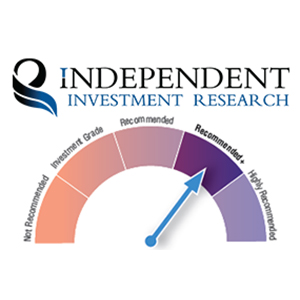
The Fund has been independently rated by Bond Adviser, Zenith Investment Partners, Lonsec and Independent Investment Research.
AMP North
Asgard
Australian Money Market
BT Panorama
CFS FirstWrap
Clearstream
Dash
HUB24
Insignia eXpand
Macquarie Wrap**
Mason Stevens
Netwealth
Powerwrap
Praemium
*Macquarie Wrap has restricted applications to the IDPS and Super menu while they undertake due diligence as part of their standard governance process.
Units in the Metrics Direct Income Fund are issued by Equity Trustees Limited AFSL 240975. Metrics Credit Partners Pty Ltd (Metrics) AFSL 416 146 is the manager of the Fund.
Units in the Metrics Direct Income Fund are issued by Equity Trustees Limited AFSL 240975. Metrics Credit Partners Pty Ltd (Metrics) AFSL 416 146 is the manager of the Fund.



Meet The Partners
Supported by an investment team in excess of 180 people.

Andrew Lockhart
Group CEO & Managing Partner + Investment Committee
Andrew has more than 35 years’ banking, funds management and financial markets experience and previously specialised in CRE investment, leverage and acquisition finance as well as corporate and institutional lending. Andrew’s considerable experience includes being responsible for the origination and portfolio risk management of large, diversified and complex investment portfolios including corporate restructurings. Andrew holds a Bachelor of Business and Masters of Business Administration from the Queensland University of Technology.

Justin Hynes
Managing Partner + Investment Committee
Justin Hynes has more than 24 years’ experience working across loan origination, structuring and portfolio management. Justin has extensive acquisition and corporate finance experience in both an advisory and principal capacity in Australia and South East Asia, including workouts and restructurings. Justin holds a Bachelor of Commerce and Bachelor of Japanese Studies from the Australian National University.

Andrew Tremain
Managing Partner + Investment Committee
Andrew has more than 35 years’ experience in corporate loans, structured, leverage and acquisition finance, funds management, portfolio management and relationship management across Australia, Europe and Asia. Andrew holds a Bachelor of Commerce from Macquarie University.

Graham McNamara
Managing Partner + Investment Committee
Graham has 40 years’ experience in banking, funds management and financial markets and has established the loan syndications and agency businesses at major Australian banks. He has considerable experience in risk management, debt origination and distribution, agency management and corporate banking. Graham has been a director of the Asia Pacific Loan Market Association and was the founding chairman of the Association’s Australian Branch. He is a Member of the Australian Institute of Company Directors.

White Paper: Understanding Private Debt Investing
In recent years, private debt investing has surged due to its ability to offer attractive, risk-adjusted returns and low capital volatility.
This white paper delves into the intricacies of private debt, exploring the features, risks and benefits of this seemingly complex asset class and its role in today’s investment landscape.
Inside, you will learn about:
- What is private debt,
- Who the borrowers are,
- Why invest in private debt,
- Risks of investing in private debt,
- How to access the market.
